



Child safety and window blinds
What does child safety mean for blinds?
Child safety for blinds is important because roller blinds and other interior solar shading often have hanging cords or beaded chains that can pose a safety risk to young children. There are European requirements and standards for function and safety that aim to reduce the risk of accidents involving strings, cords and chains. The requirements affect both how blinds must be designed and how they must be installed.
In this guide, we explain what this means in practice, including the requirements for child safety devices and installation height, as well as examples of blinds that are cordless and chain-free by design.
Fastening device for beaded chains/cords
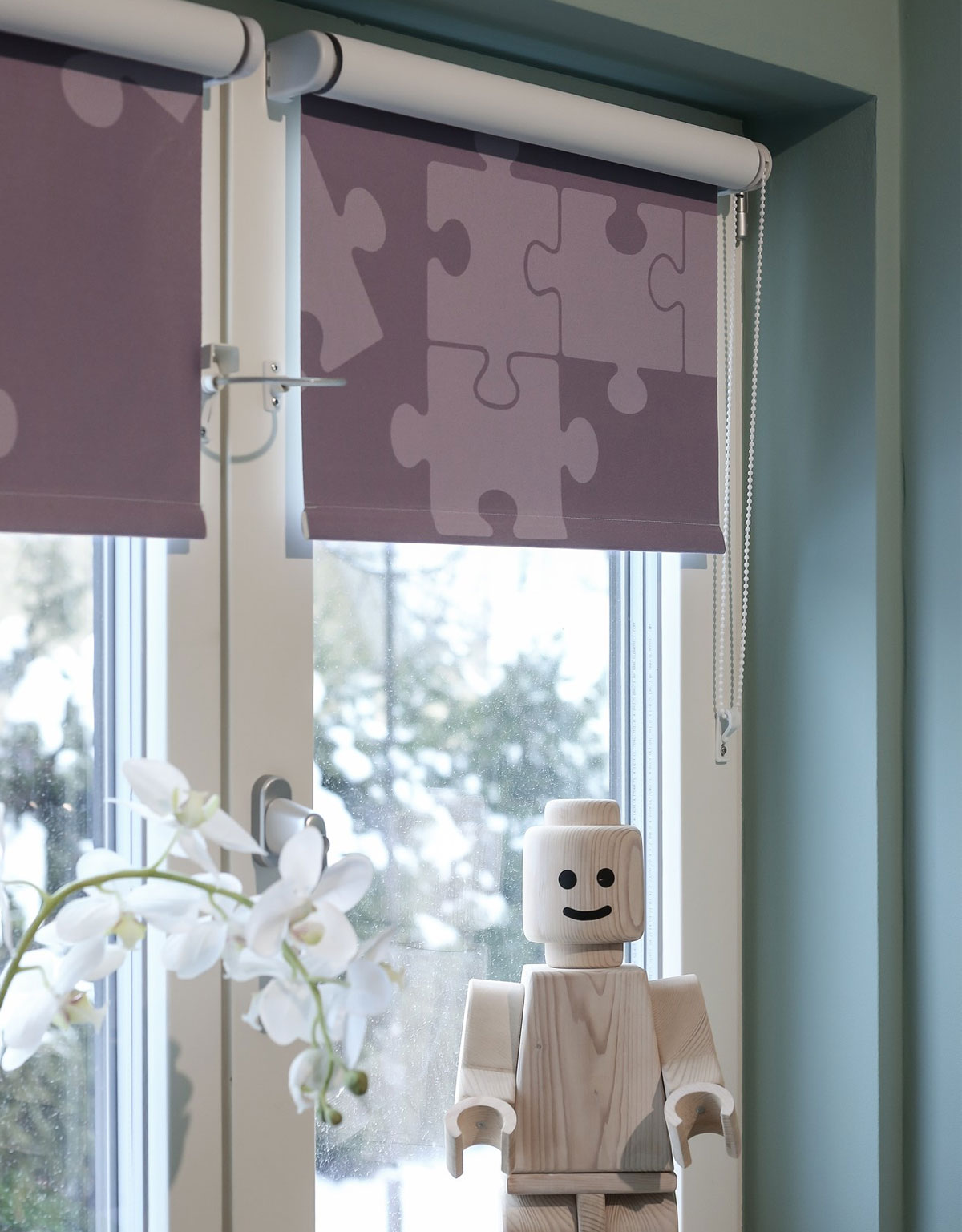
According to current requirements, sun blinds with cords or beaded chains must be delivered with a safety device that prevents cords or chains from hanging freely and posing a risk to small children. All our sun blinds are delivered with such a fastening device, which is mounted on the wall or window to keep the beaded chain or cord in place. For child safety to work, it is important that the safety device is installed according to the instructions.
Installation height and child safety
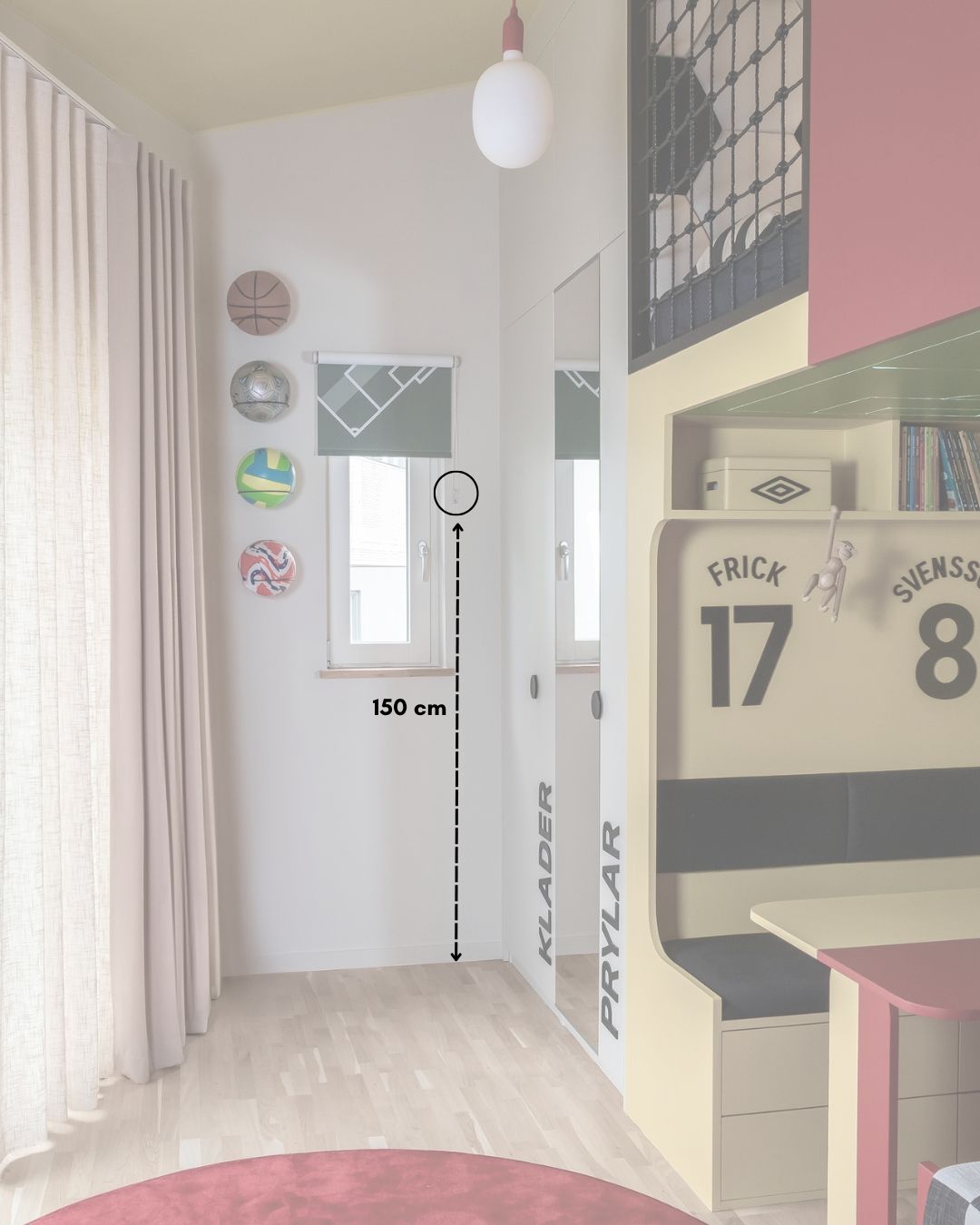
The installation height affects where the cord or beaded chain used for operation ends up, and is therefore important for child safety. To reduce the risk of small children reaching cords or chains, the cord or chain must be placed out of reach in accordance with current safety requirements.
Installation height is the distance from the floor up to the point where the blind is installed. On made-to-measure blinds with cord or beaded chain operation, the installation height is used to adjust the length of the chain or cord so that it ends up at a child-safe distance. As a guideline, cords and chains should not hang too close to the floor in any of the blind's positions, and if the installation height is unknown, the chain or cord must either be limited in length or secured with an approved safety device.
Cordless and chain-free blinds
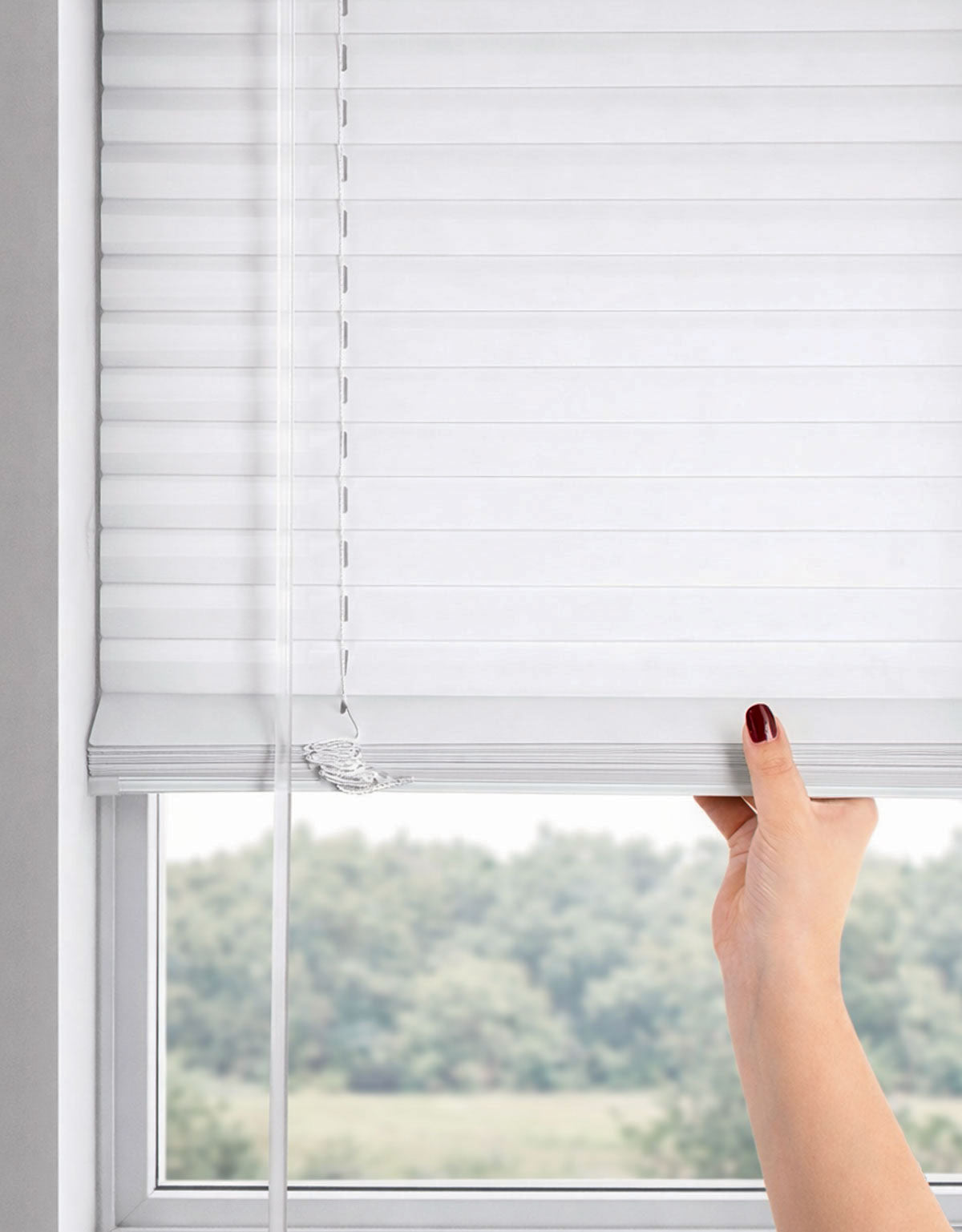
If you want to avoid hanging cords or chains altogether, there are cordless and chain-free blinds that offer extra child safety. For example, you can choose a roller blind without a cord or chain, or a Venetian blind without control cords. These solutions can be operated by pulling the blind itself by hand into the desired position. Another option is a motorised roller blind, controlled by remote control or via an app.
Common questions about child safety
What is meant by the installation height of a blind?
Installation height is the distance from the floor up to the point where the blind is installed. The installation height determines where the chain ends up and how long it needs to be in order to stay out of reach of small children in accordance with current safety regulations.
Example: If the blind is installed 200 cm from the floor, the chain will be 50 cm long (200 cm – 150 cm = 50 cm), so that the lowest part of the chain is at a child-safe distance.
For made-to-measure blinds, the installation height is used to adjust the chain length. If the installation height is unknown, a standard chain of 100 cm may be supplied in some cases.
For more information on how to measure the installation height, you can read our measurement guide for roller blinds.
Why is the installation height important for child safety?
The installation height is important for child safety because it determines where the beaded chain or adjustment cord ends up once the blind is installed. The aim is to make sure the chain or cord is out of reach of small children, measured from the floor. This matters even if the chain or cord is secured with a safety device, as an incorrect installation height can mean that the chain or cord used for operation still hangs too low.
Do the child safety requirements apply to all types of blinds?
Yes, child safety requirements apply to sun protection products that have dangling cords or beaded chains, as these can pose a risk to young children. This includes several types of internal sun protection, such as roller blinds, pleated blinds, vertical blinds, and Roman blinds. The exact requirements depend on the product's design and how it is operated.
Who is responsible for making sure the blind is correctly installed and child-safe?
Under current requirements, the retailer is responsible for complying with the rules on the length of beaded chains and cords and for ensuring that the blind is supplied with the correct safety device. This also applies to professional blind installers, who must comply with the requirements for both installation height and the installation of safety devices. If you install the blind yourself, it is your responsibility to follow the installation instructions and safety recommendations so that the blind is child-safe in your home.
Are there blinds that are completely cordless and chain-free?
Yes, for extra child safety there are blinds that are completely cordless and chain-free, for example a roller blind without a beaded chain or a Venetian blind without strings. These can be operated by pulling the blind into the desired position by hand. Another option is motorised blinds controlled by remote control or via an app.