



GUIDE
Vertical blinds
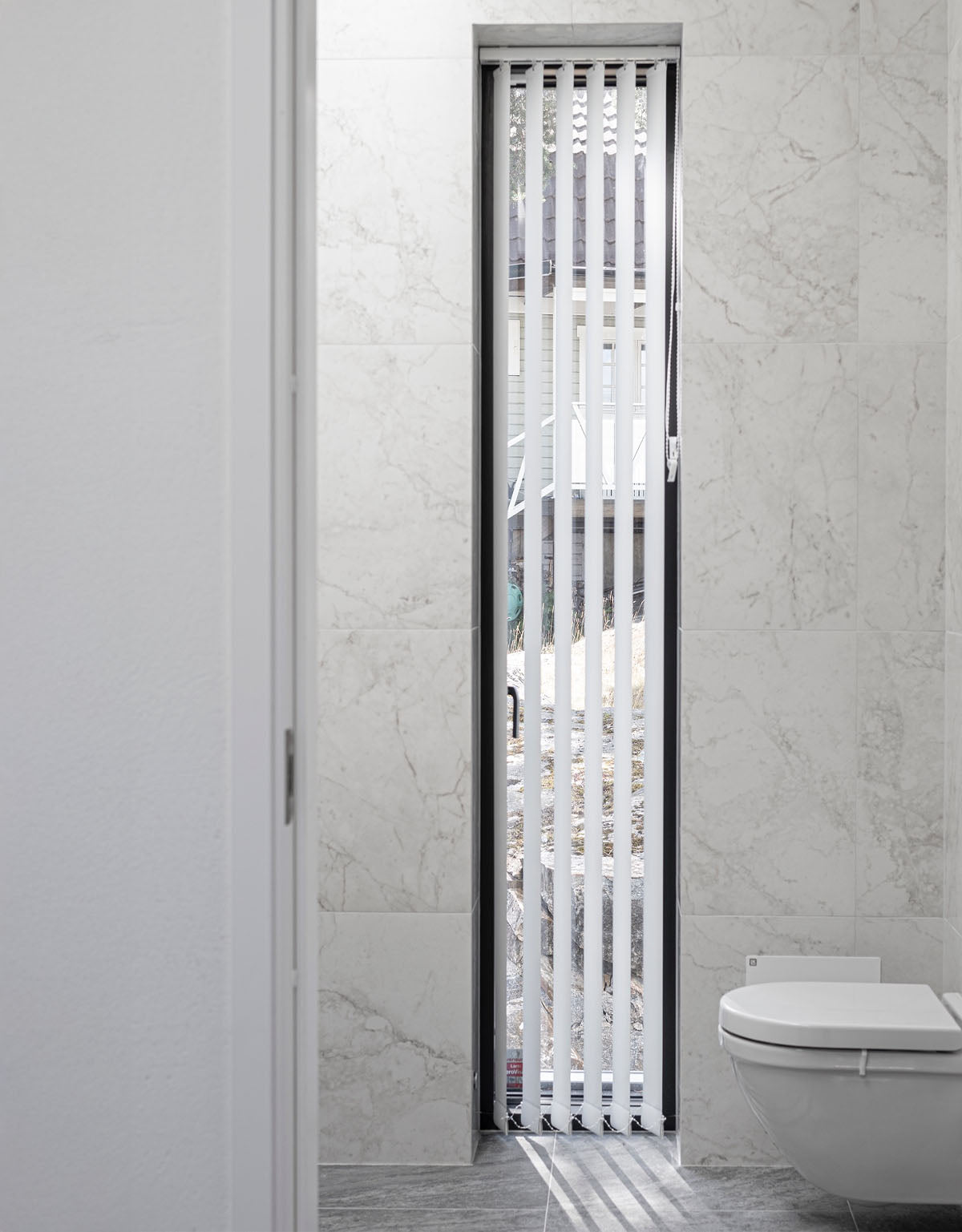
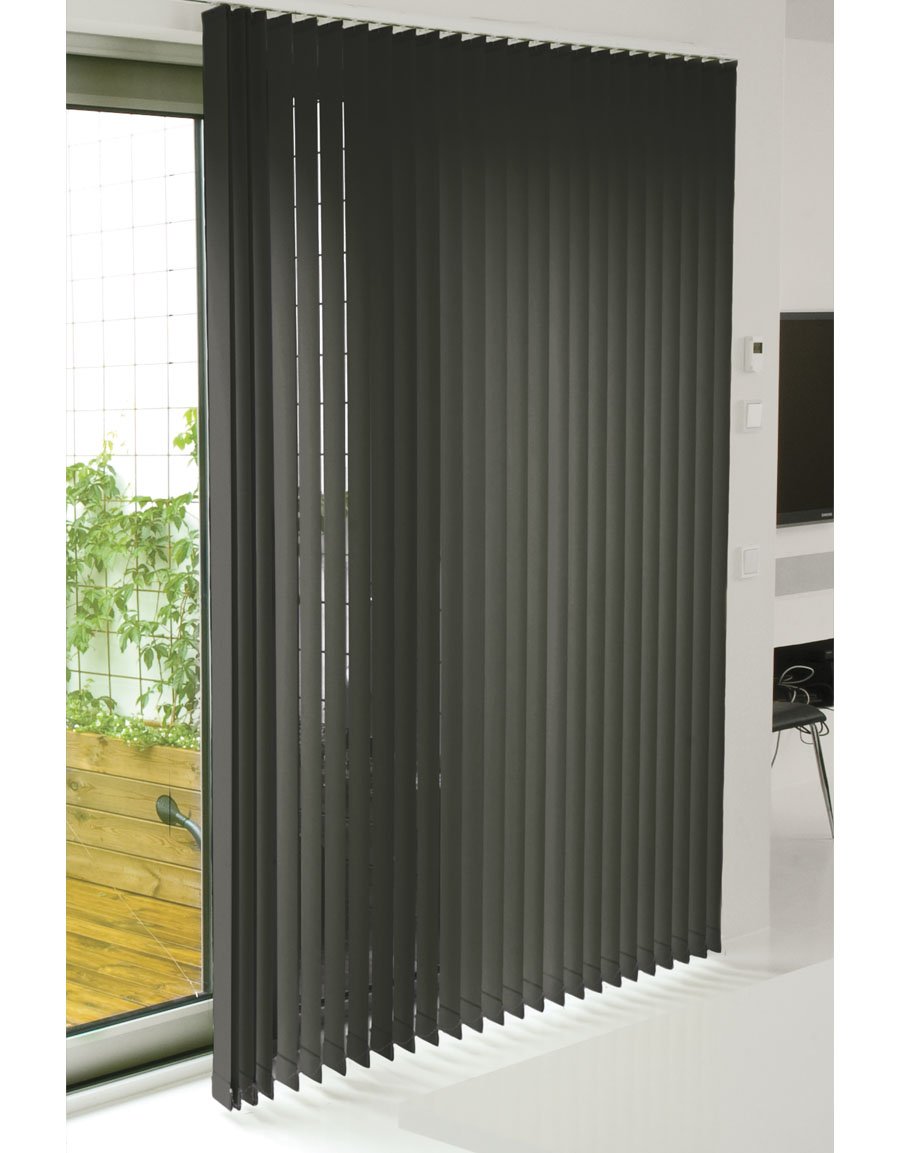
Vertical blinds are a flexible type of blind that makes it easy to control light transmission and privacy in large or tall windows and glazed sections. They are particularly well suited to wide windows, conservatories and glazed balconies where you want to control the light or privacy over larger areas.
Vertical blinds come in various models and can be made to measure, with fabrics ranging from light-filtering to blackout. They can also be adapted for windows in sloping ceilings, where other blinds can sometimes be more difficult to use.
In this guide, we go through how vertical blinds are measured, installed and adapted, and help you compare models and choose the right solution.
Vertical blinds in large windows
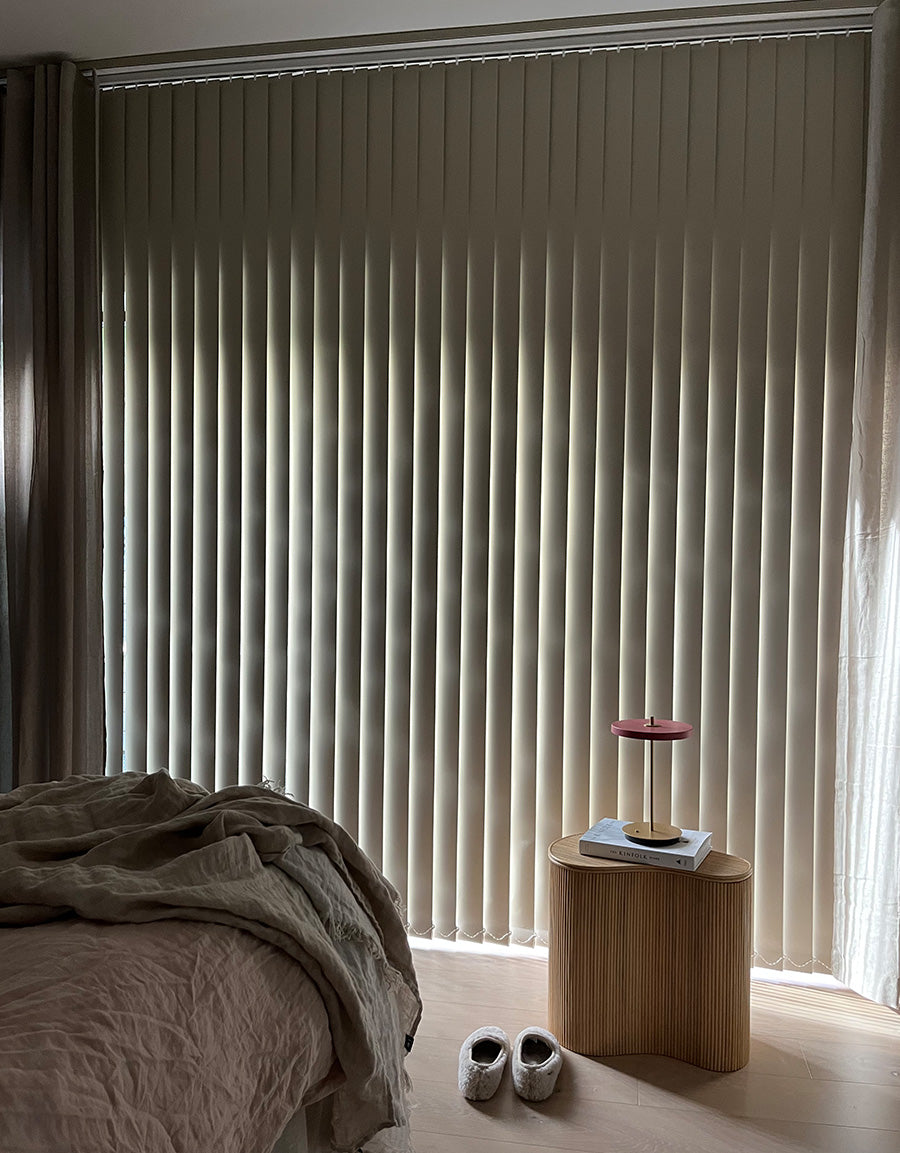
Vertical blinds are particularly well suited to large windows and glazed sections where you want to control light transmission and privacy over a larger area. That is why they are common in conservatories and on glazed balconies, where the sun often beats down for part of the day and other blinds are not always enough.
Vertical blinds can also be used as room dividers when you want to section off an area. Because the slats can be rotated and drawn aside, the vertical blind is easy to operate even across larger areas, where other blinds can feel more cumbersome.
Flexible light control
Twist and pull the slats to easily control light transmission and privacy.
Fits most windows
Can be adapted for regular windows and slanted windows, for example in attics.
Made-to-measure vertical blinds
Tailor to the window's width and height for a precise result.

Monoflex - vertical blinds in fixed widths
Monoflex is a practical vertical blind in ready-made widths and an affordable option when standard sizes are enough. The slats are tilted to control the light and drawn aside with a draw rod. You can easily cut the slats to height yourself to fit the vertical blind to the height of your window or glazed section.
Monoflex is available both as a pre-packaged solution in a smaller selection of widths and as a separate track in more fixed widths. If you choose a separate track, it can also be cut to the correct width and supplemented with the number of slats you need.
Brief overview (Monoflex):
- Cost-effective option
- Fixed track widths
- You can easily cut the height yourself
- Both tilted and opened with a wand
Opti Pro - made-to-measure vertical blinds
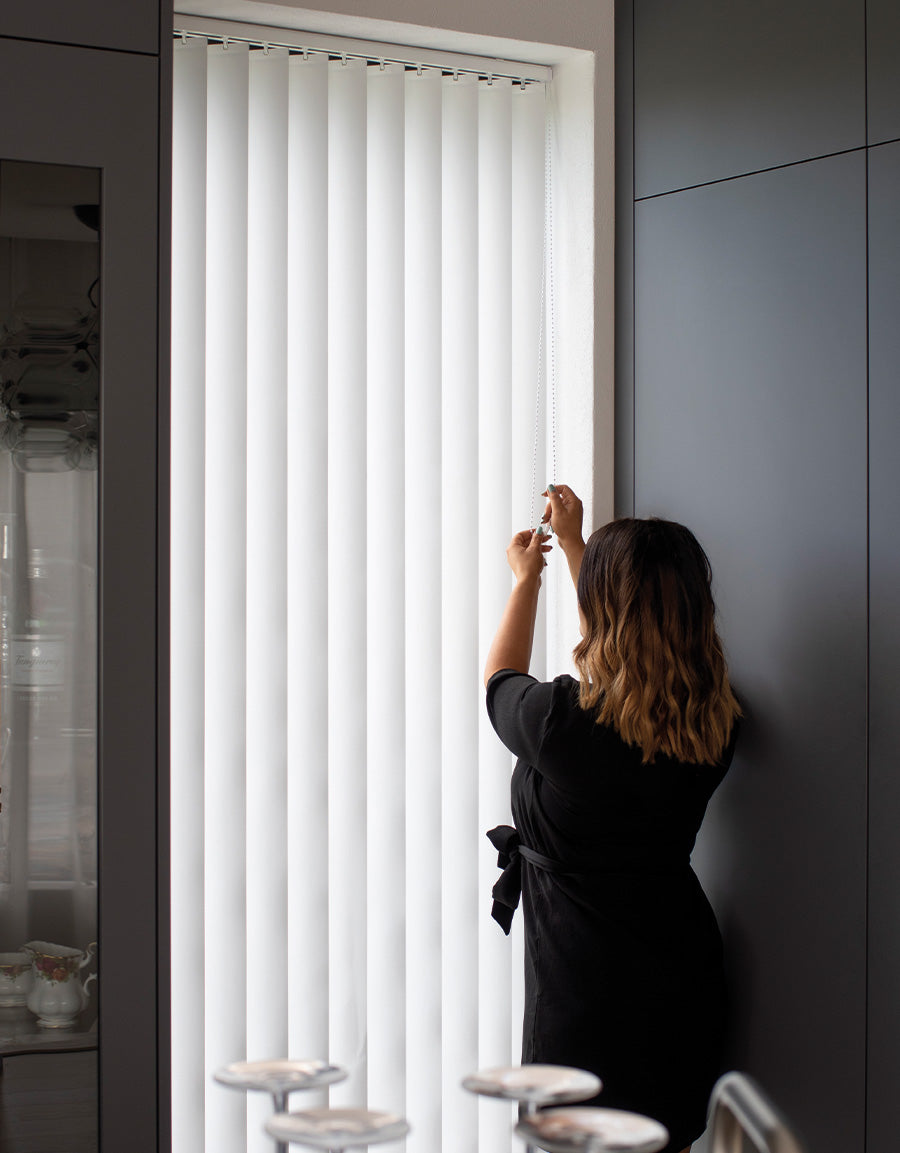
Opti Pro is a vertical blind that is made to measure and manufactured complete, in the exact width and height to fit your window measurements. The model offers greater freedom of choice in material and function, with a wide selection of vertical blind fabrics. The slats are tilted and adjusted with a cord and chain. Choose between light-filtering or blackout fabric depending on whether you want to filter daylight and provide privacy, or darken the room.
In addition to the standard versions, Opti Pro can also be customised as a special model, for example with a centre opening or for sloping windows. The selection on the website is limited – contact us if you can't find the solution or fabric you need.
Brief overview (Opti Pro):
- Manufactured precisely to exact measurements
- Greater freedom of choice with many slat fabrics
- Easy installation
- Tilted and adjusted with cord and chain
- Available with light-filtering or blackout fabric
How to measure for vertical blinds
Before you measure: decide whether the vertical blind is to be mounted on the ceiling or in a recess, and whether the slats should end up in front of the window or to the side when parked. With ceiling mounting, you can choose a longer track if you want to be able to park the slats next to the window – in that case, enter the exact required width.
Width
- Recess fitting: Measure the width of the recess in at least three places (top, middle and bottom). Take the smallest measurement and deduct 1 cm, so that the vertical blind fits and can hang freely without touching the sides.
- When you enter measurements in your order, you give the measurements of the finished product (this applies to both width and height).
Height
Measure the total area to be covered – the height stated is the total height including the track.
- For recess fitting, or if the vertical blind is to hang floor to ceiling: measure the height in three places (left, middle and right) and use the smallest measurement so that the slats do not touch the floor.
Measuring for sloping/angled windows (special order)
- Width: always give the width as the straight/horizontal measurement – not the angled side.
- Height: state the height at both the tallest and the shortest points.
Vertical blinds for sloping windows need to be individually adapted, so please contact us before you order and we'll help you find the right solution.
Get inspired by our customers
Common questions about vertical blinds
Can vertical blinds be blackout?
Vertical blinds can be ordered with blackout fabric/slats. How dark the room gets depends on factors such as the design of the window and any light transmission at the sides. If you'd like to read more about blackout and alternative solutions, see our blackout guide.
Can vertical blinds be made to measure?
Yes, we offer made-to-measure vertical blinds, manufactured to your required width and height. For vertical blinds of a standardized width, the slats can instead be cut to your desired length.
Are vertical blinds suitable for conservatories or glazed balconies?
Yes, vertical blinds are suitable for conservatories and enclosed balconies, especially for large glass surfaces where you want to control light and privacy. They can also be made to measure to fit the window measurements.