

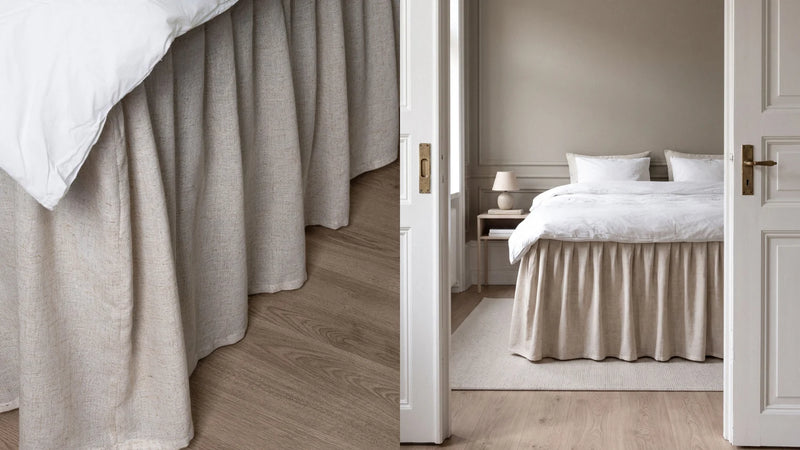


GUIDE
Curtains in the living room
Curtains in the living room play an important role in both the overall feel and the function of the room. In living rooms with large or many windows, curtains can help to dim strong light, reduce solar heat in the summer, and reduce glare on the TV, especially if the windows are placed behind the sofa.
Textiles also contribute to a warm and inviting atmosphere that promotes togetherness, and curtains are one of the most effective interior design details for enhancing that feeling.
Here we share inspiration and curtain tips to help you create the right atmosphere in your living room.
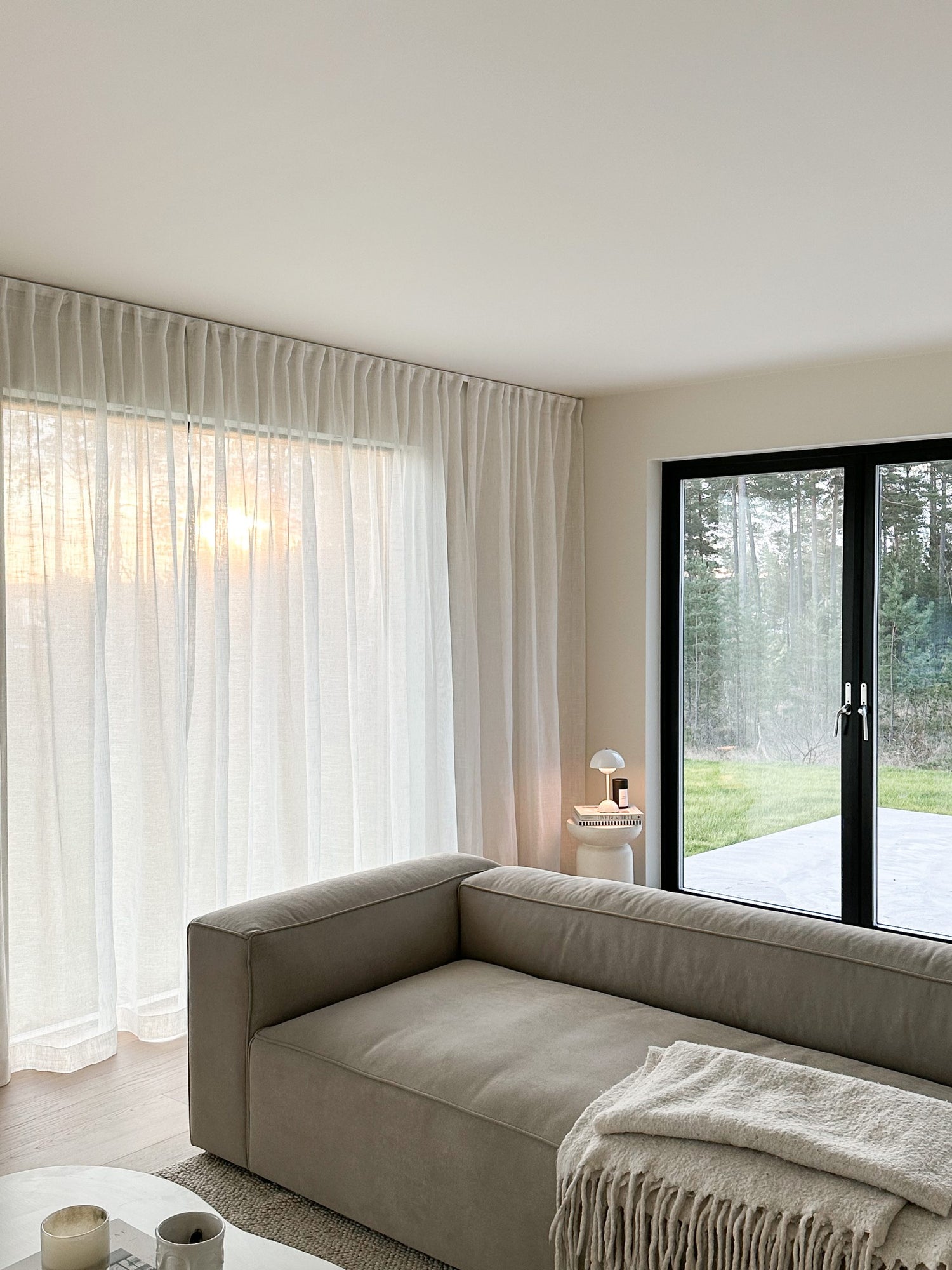
Wall-to-wall curtains
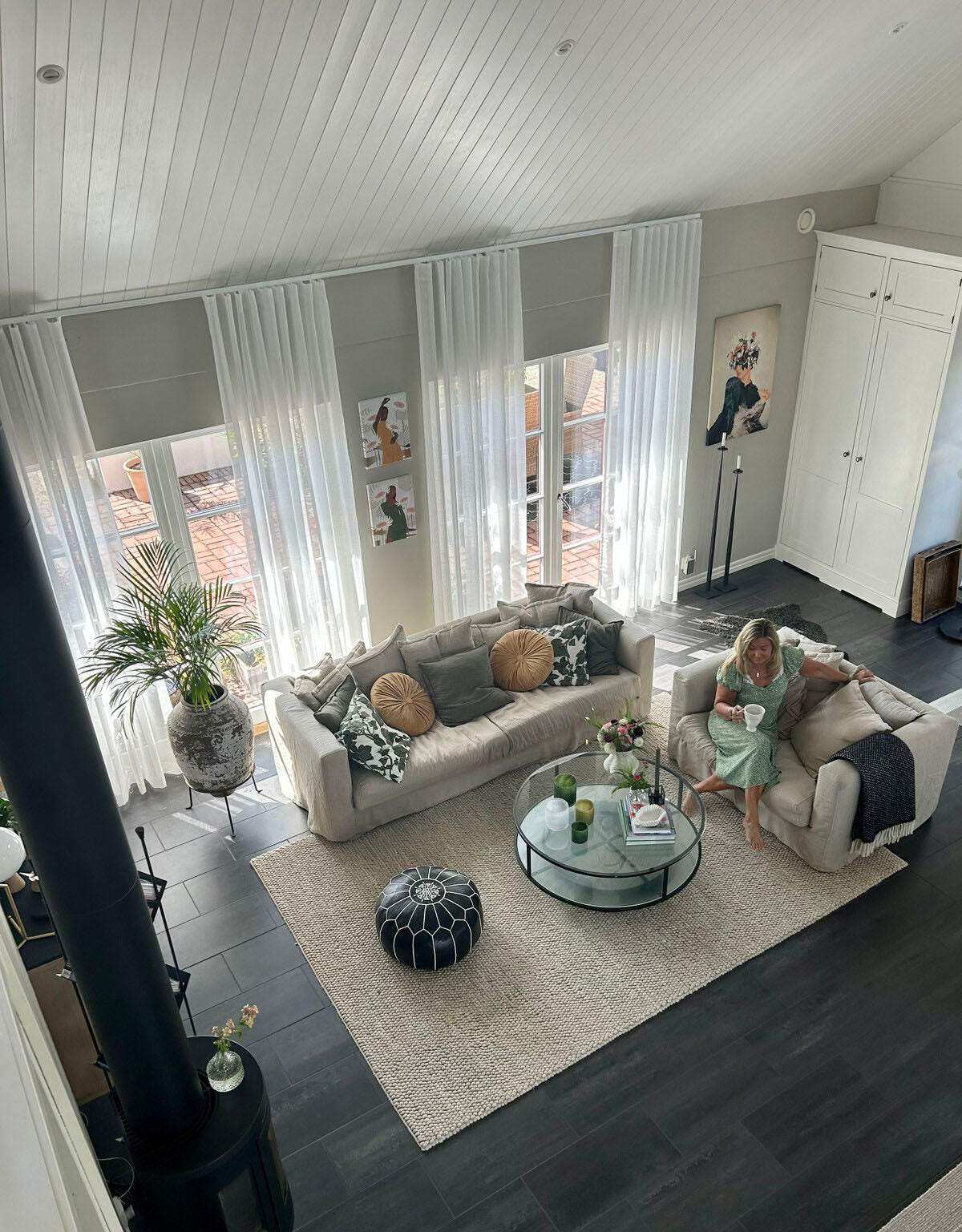
In the living room, it can be both stylish and functional to hang curtains from wall to wall, especially if you have large window sections. If you choose sheer white curtains, you let in plenty of natural light while creating an airy, elegant feel. Sheer fabrics also help soften the light, which can reduce both solar heat and glare on the TV.
With a curtain track, it's easy to draw the curtains open or closed, depending on the time of day and your needs. The result frames the room in a striking way and can make the windows feel larger and more prominent.
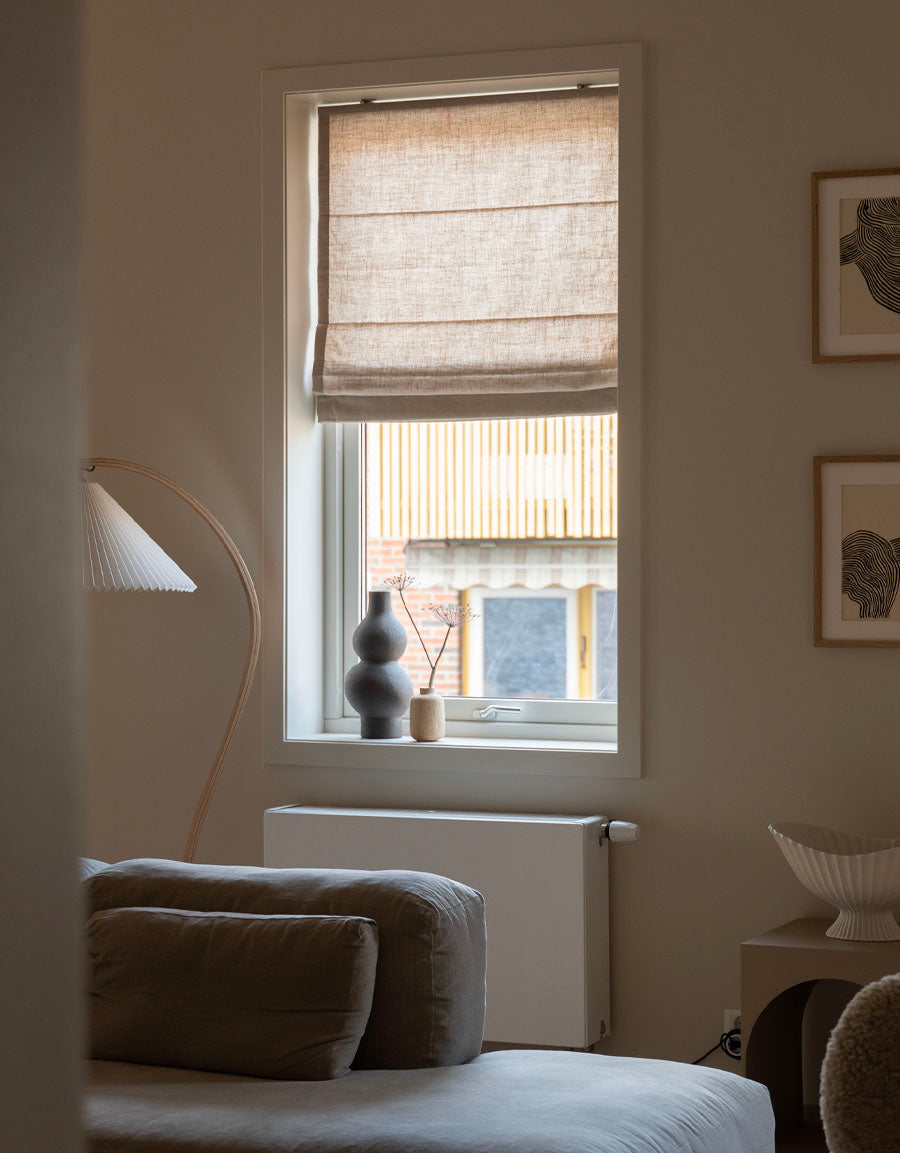
Japandi – Scandinavian minimalism with a Japanese twist
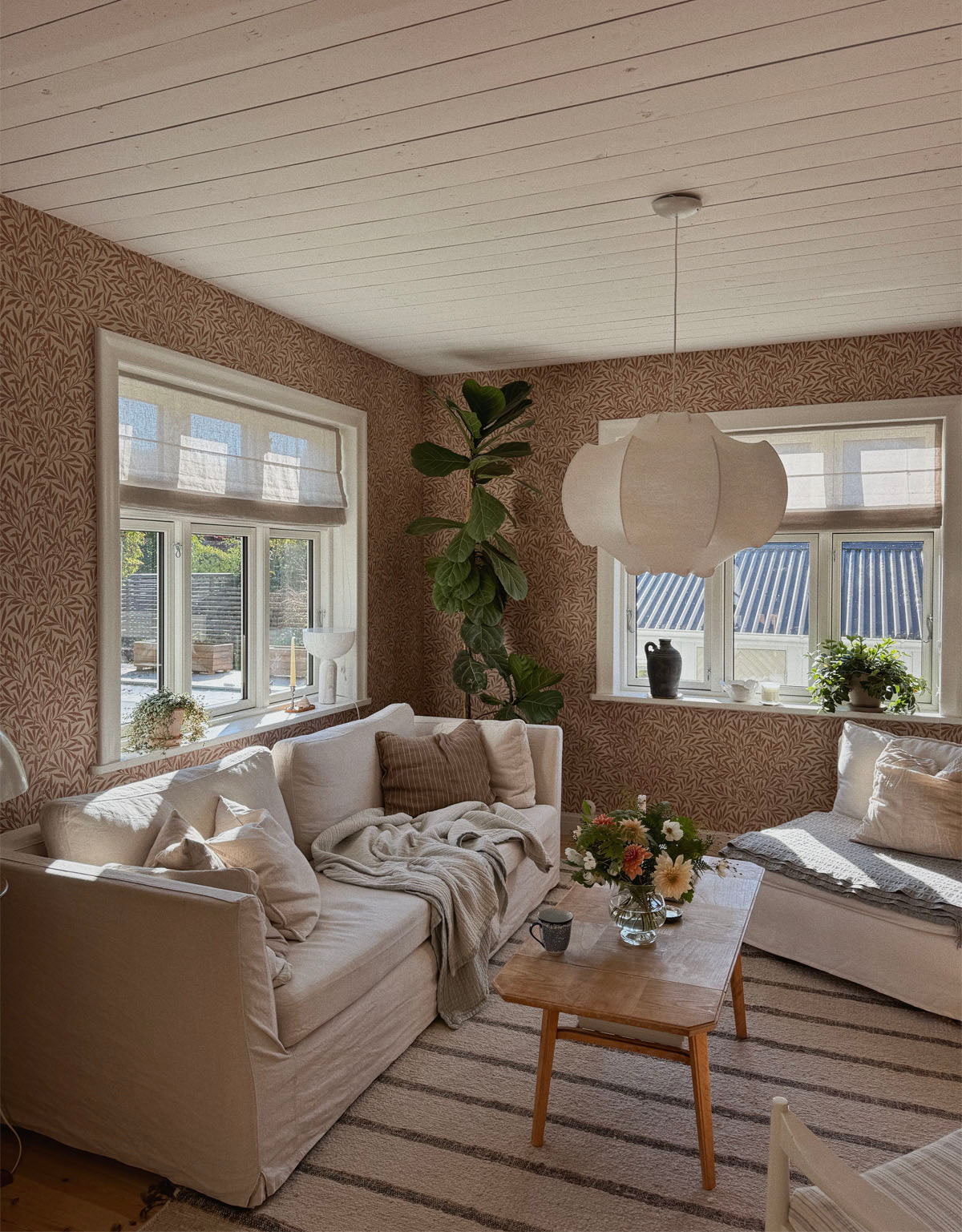
Roman blinds are a stylish alternative to curtains in the living room, especially if you like Japandi – the trendy style that combines Scandinavian minimalism with Japanese elegance. Since Japandi is characterized by clean lines, natural materials, and a pared-down expression, Roman blinds in natural shades are particularly well-suited to setting the style. Their simple form enhances the sleek feel while adding a warm, soft touch to the room.
Roman blinds also work well as sun protection – a balance between the functionality of a roller blind and the softer expression of a curtain. You can easily lower them when you want to block out light and let them be a beautiful part of the window decor for the rest of the day.
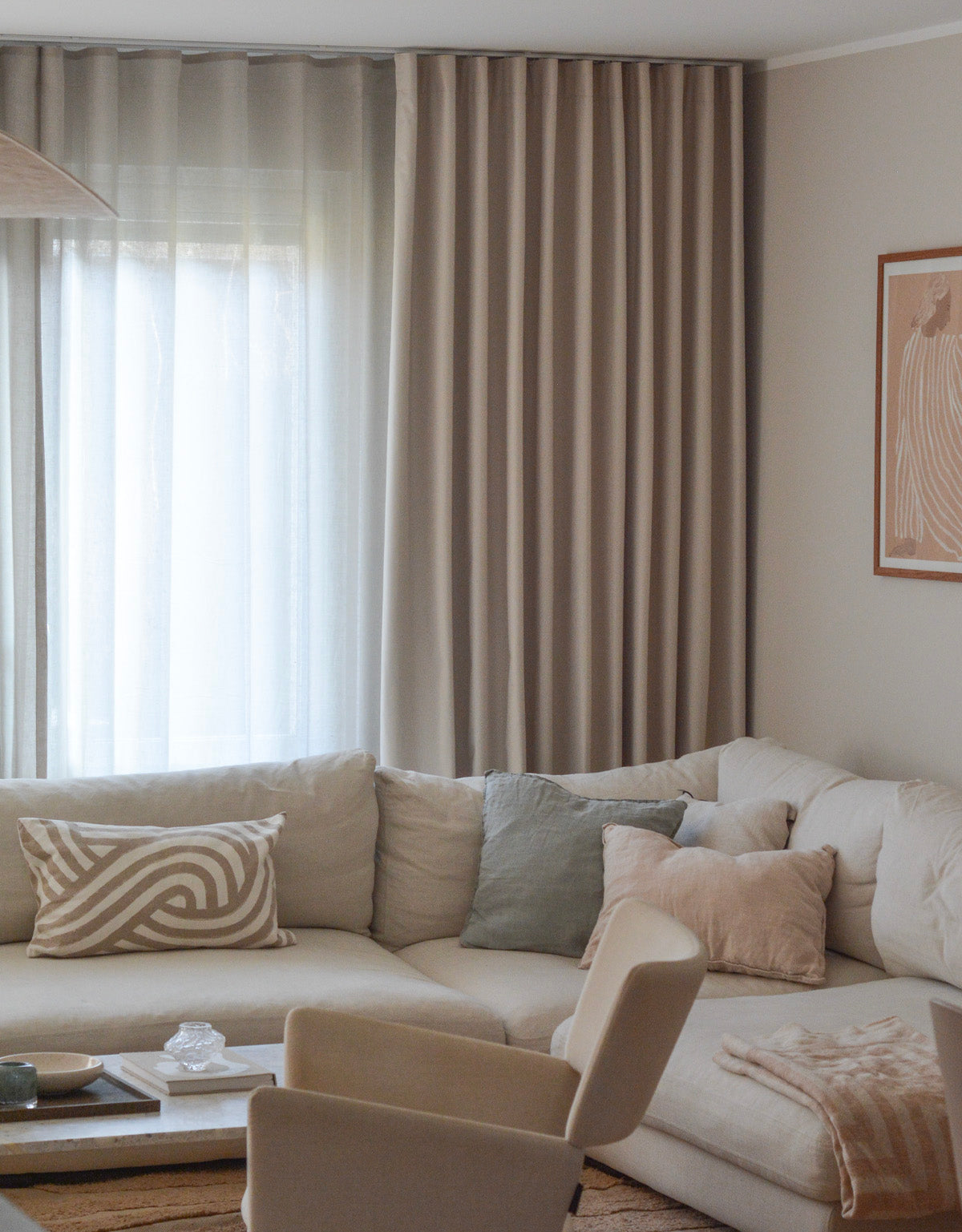
Tone-on-tone in the living room
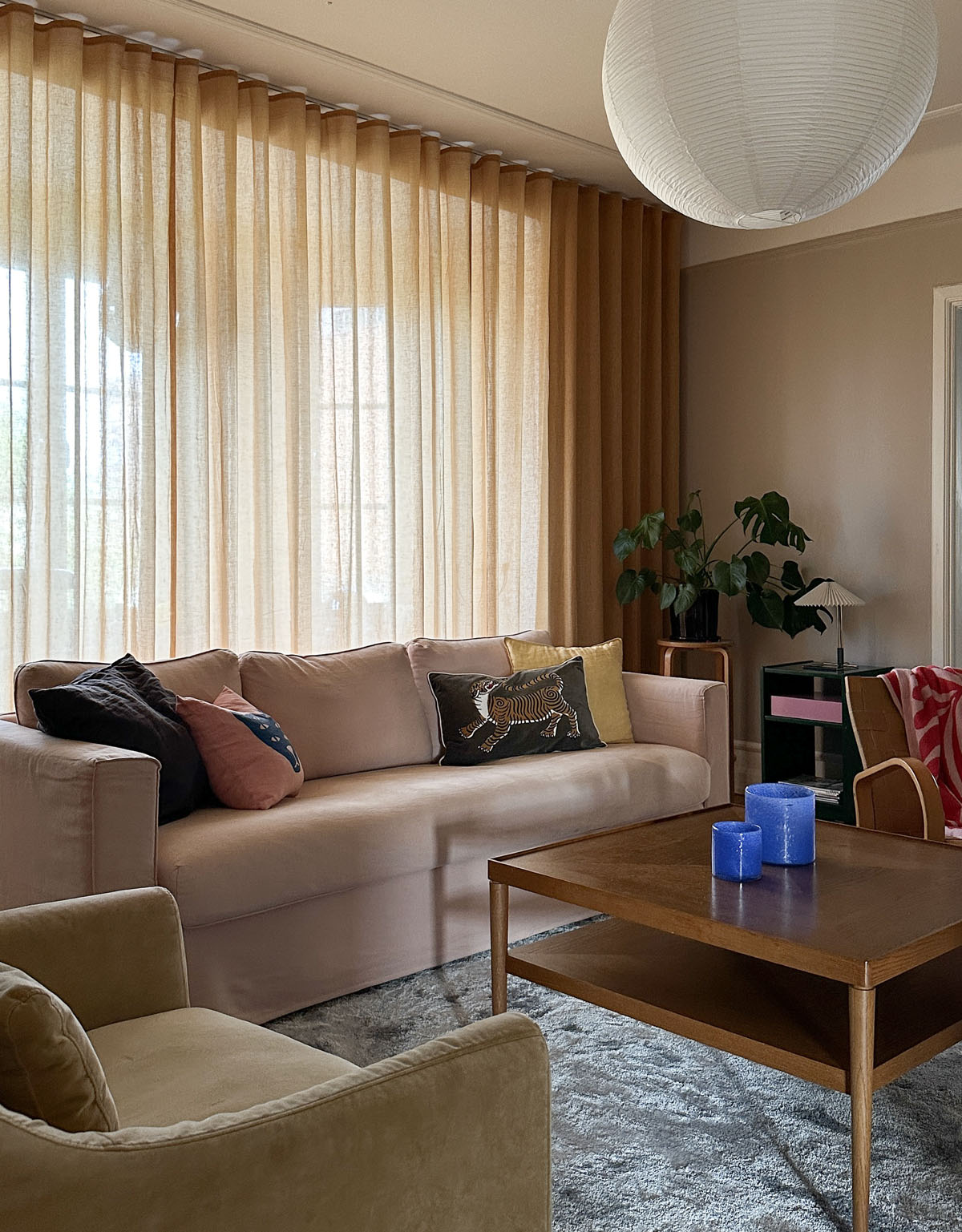
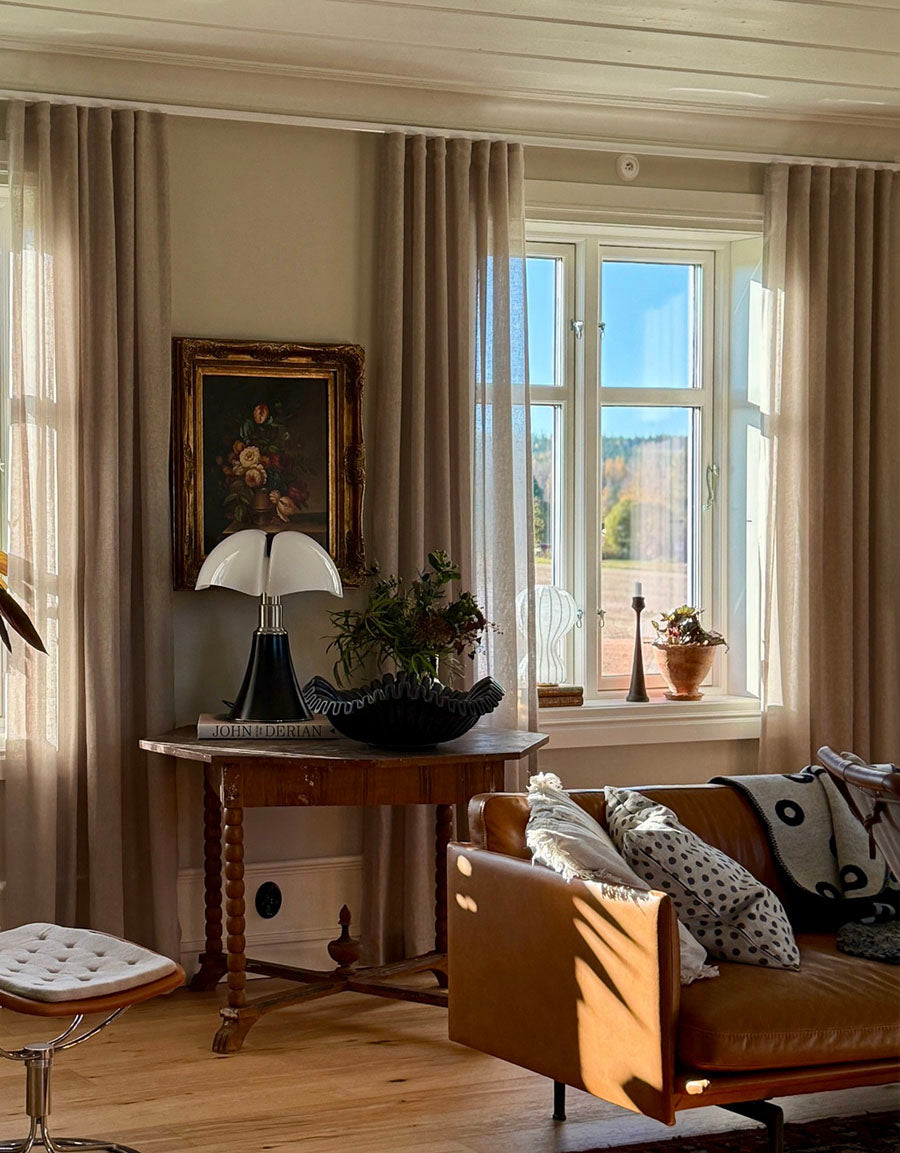
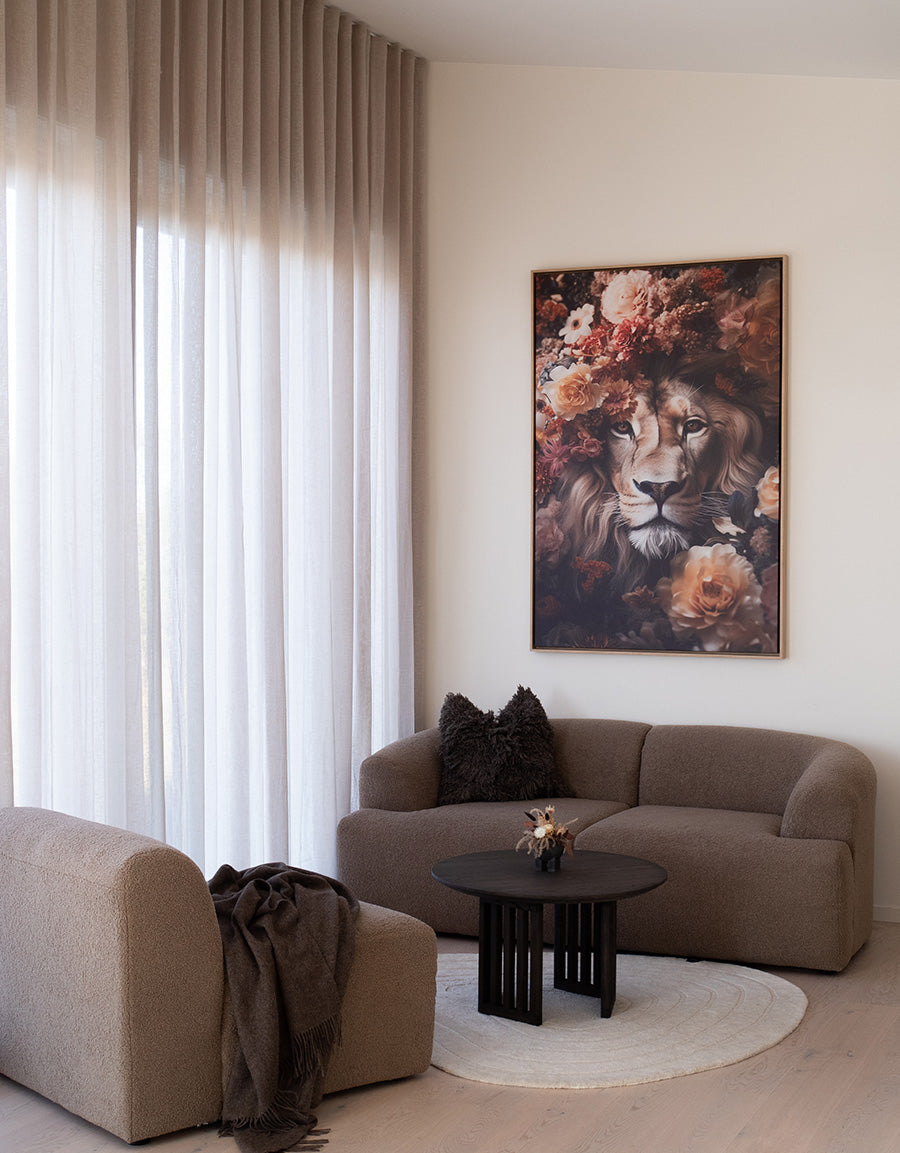
Let the living room curtains match the wall colour for a calm and cohesive feel. If many interior design elements are to coexist in the room, it can be stylish to start with a cohesive base where curtains and walls match, or are close to each other in the colour palette. This calms the eye, especially in larger rooms with a lot of furniture and details in the same area.
Feel free to pick up the same shades in smaller elements such as cushions, throws, or rugs for a harmonious overall impression. Light colours can make the room feel larger and airier, while darker shades often create a warmer and cosier expression.
Cosy feel and light transmission
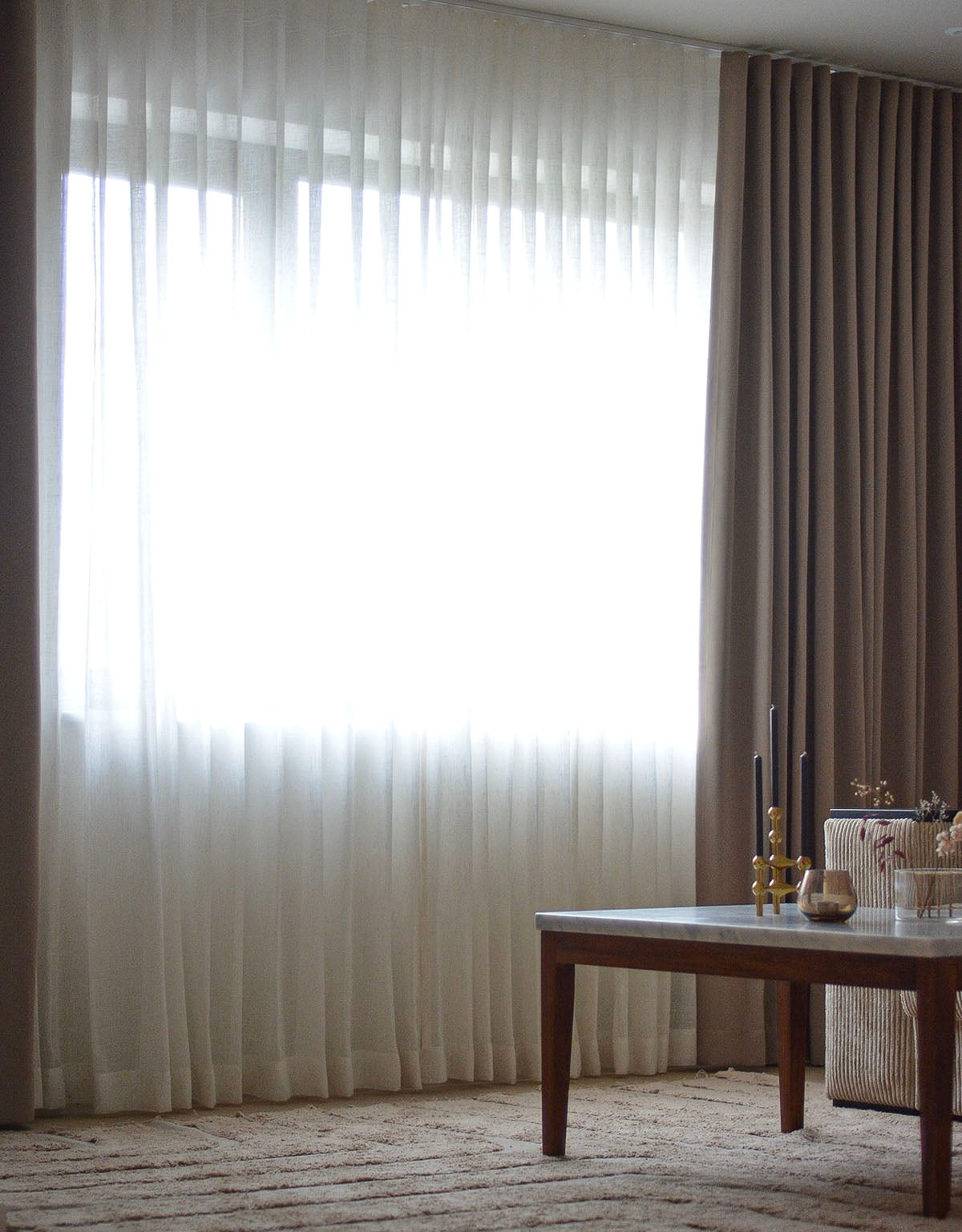
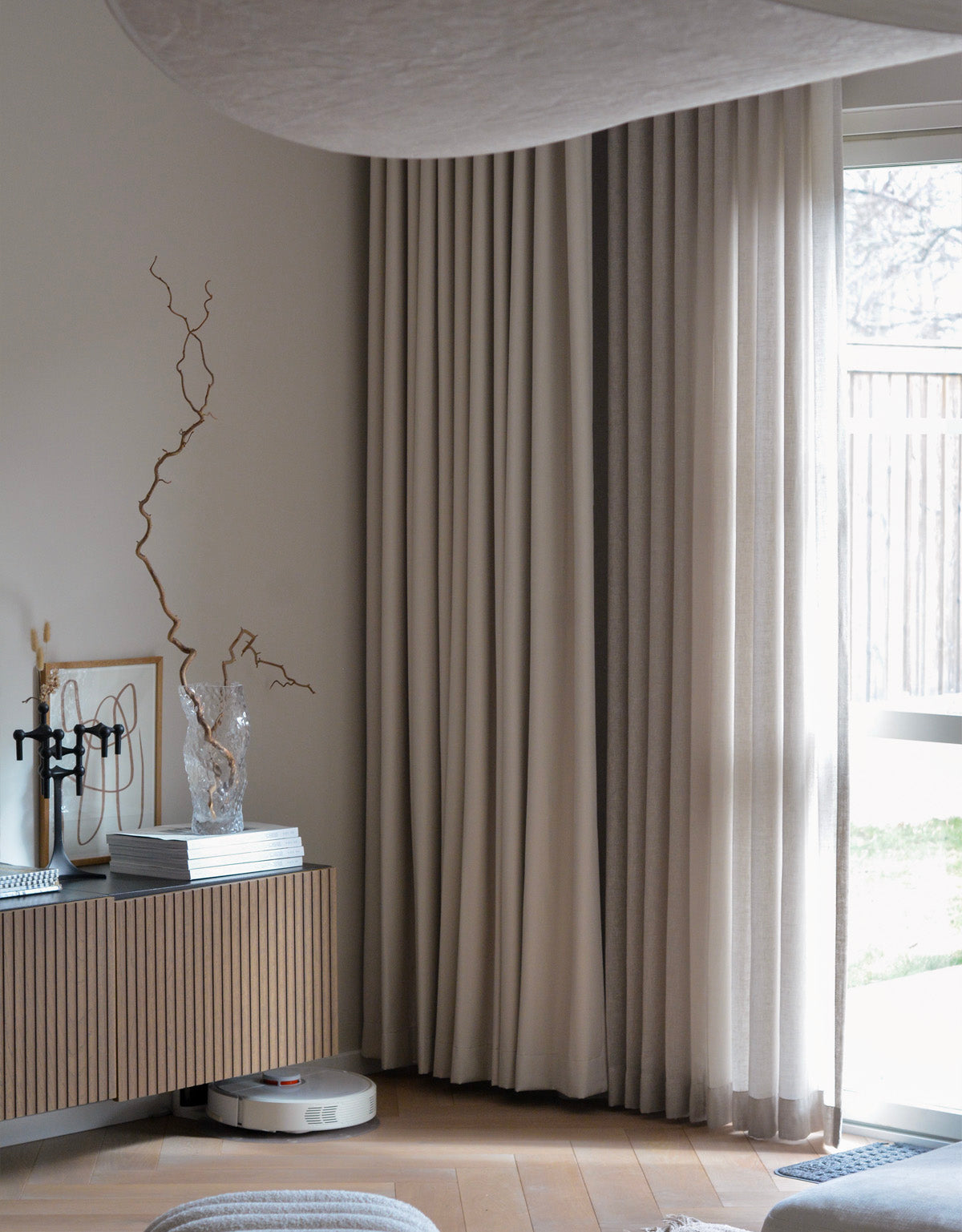
With double curtains, you can create a soft and cosy feel in the living room while gaining greater flexibility in how you light the room. A thin inner layer provides pleasant light transmission during the day, while a denser outer layer can be drawn when needed – for example, when you want to reduce the light and create an extra cosy atmosphere for film nights during the lighter months of the year.
If possible, ceiling tracks can give an extra elegant look, but wall-mounted tracks or curtain poles work just as well, especially if you have a sloping ceiling or vaulted ceiling. For an airy and spacious feel, it's nice to hang the curtains high and let them frame the room with generous amounts of fabric.
Get inspired by our customers
Common questions about living room curtains
Which curtains are best suited for the living room?
Choose curtains for the living room with both style and function in mind. Sheer curtains are particularly well suited to large window sections if you want to soften the light, reduce glare and still keep plenty of lovely daylight. For a calm overall impression, you can choose curtains in a shade close to the wall colour or the rest of your interior – tone on tone or within the same colour palette.
How do curtains affect light transmission in the living room?
Curtains make it easy to control light transmission in the living room, especially if you have many or large window sections. How much light is let in depends mainly on the density of the fabric – from sheer curtains that soften the light to denser fabrics and dimout fabrics that block more of the light.
If you want to reduce glare when the sun is shining, it's practical to choose curtains with ample width so you can close them across the entire window, and preferably hang them on a curtain track that makes it easy to vary between open and closed.
Which curtains are best behind the sofa?
Which curtains work best behind the sofa depends on how much light the window lets in and how the room is furnished. If you have a TV in front of the sofa, glare is often especially noticeable when the sun is shining straight in. A double layer of curtains can then be a smart solution: sheer curtains closest to the window for soft daylight, and denser or dimout curtains on the outside that you can draw when watching TV and on film nights. This way, you get both light transmission and the option to screen off the light when needed.
What kind of curtains are suitable for a balcony or patio door?
For balcony or patio doors, it's smart to choose a curtain solution that makes it easy to pass through, especially during the summer months. If the door is part of a larger window section, it can be practical to hang two curtain panels by the door, so you can walk between them without the curtain being in the way. Curtain tiebacks are also a nice solution, as you can easily pull the curtain aside and secure it when the door is open and you want to be able to go in and out.
How do I match curtains with a sofa or rug?
Letting your curtains harmonise with other large textiles, such as the sofa or rug, is a good idea in the living room, where many interior details come together. You don't need to choose exactly the same colour – a similar shade or a tone from the same colour palette is often enough to create a calm, cohesive look.
To get it right, it can be smart to order fabric samples and compare the curtain fabric with the colour of your sofa or rug in the room's light.